
Sleep Apnea Treatment in St. Petersburg, FL: A Non-CPAP Alternative
Published by Dr. Roberto Macedo, DDS, MS, PhD, Prosthodontist
Many sleep apnea patients refuse CPAP therapy because they cannot tolerate the mask. We offer a laser-assisted treatment that addresses the structural causes of sleep apnea for qualifying patients.
Laser-Assisted Soft Tissue Reduction
For patients with mild to moderate obstructive sleep apnea caused by soft tissue obstruction in the airway, laser-assisted treatment can reduce the soft tissue volume that collapses during sleep. This is a non-surgical, non-CPAP approach that has helped many patients sleep through the night without a mask.
It is not appropriate for every patient. Severe sleep apnea, sleep apnea caused by jaw or skeletal structure, and certain medical conditions require different treatment paths. We evaluate carefully before recommending laser treatment.
Patients who qualify typically need 3-5 treatment sessions spread over a few weeks. Each session is approximately 30 minutes. No anesthesia, no recovery time, no downtime.
Request a ConsultationWho Qualifies
- Mild to moderate obstructive sleep apnea
- Soft tissue obstruction confirmed by sleep study
- CPAP intolerance or refusal
- Snoring as primary symptom
- Adult patients in good general health
- Note: Severe cases require alternative approaches
Assessment First
1. Sleep Study Review
We need a recent sleep study. If you do not have one, we coordinate with sleep specialists to get one.
2. Airway Evaluation
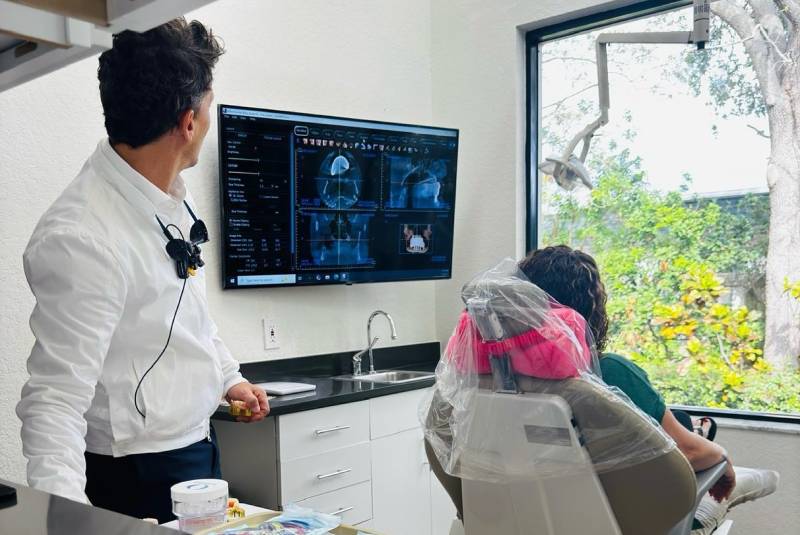
Detailed examination of soft tissue, airway dimensions, and structural factors. 3D imaging where indicated.
3. Honest Assessment
Some patients qualify. Some do not. We tell you the truth, not what you want to hear.
4. Treatment Plan
If you qualify, we present a clear plan with realistic expectations on outcomes and timelines.
5. Treatment Sessions
3-5 sessions, 30 min each, spaced over a few weeks. No anesthesia, no downtime.
6. Outcome Verification
Follow-up sleep study to verify improvement. We track real outcomes, not just reduced symptoms.
Sleep Apnea, Answered
What are the most common signs of sleep apnea?
Loud, persistent snoring is the one most people hear about first, usually from a partner. The rest are easy to write off: waking up gasping or choking, morning headaches, a dry mouth or sore throat on waking, restless sleep, waking several times a night, daytime drowsiness, trouble concentrating, and a short temper. If several of those sound familiar, it is worth getting checked.
Is loud snoring the same thing as sleep apnea?
No. Snoring is the sound of air moving past relaxed tissue in the throat, and plenty of people snore without having sleep apnea. Apnea is different: breathing actually stops and restarts through the night. The clue that separates the two is what happens between the snores, gasping, choking, or a stretch of silence ended by a sharp breath. Only a sleep study can tell you which one you have.
What happens if sleep apnea is left untreated?
Every time breathing stops, oxygen drops and your body wakes just enough to restart it, so you never settle into proper deep sleep. Day to day that shows up as exhaustion, poor concentration, irritability, and nodding off when you should not. Over the long run, untreated obstructive sleep apnea is linked with high blood pressure, heart disease, stroke, and diabetes. It is a medical condition, not just a snoring problem.
Do I need a sleep study before you can treat me?
Yes, and there is no way around it. Sleep apnea is a medical diagnosis made by a physician from a sleep study. We treat sleep apnea, we do not diagnose it. If you already have a study, bring the report to your evaluation. If you do not, we coordinate with sleep specialists to get testing arranged, in a sleep lab or at home depending on what your physician orders.
My sleep study is a few years old. Is that still usable?
Bring it, because the history is useful, but expect us to want a current one. Weight, general health, and sleep all move over a few years, and the treatment decision has to be made on where your numbers sit now. Your evaluation starts by reviewing what you already have, and we will tell you honestly whether it is still good enough to plan from.
What is an oral appliance?
A custom-made device worn only while you sleep. It looks a lot like a mouth guard or a retainer, and it holds the lower jaw slightly forward so the tongue and the soft tissue in the throat do not fall back and block the airway. It is made from impressions of your own teeth, so it fits you and nobody else. Nothing is worn during the day.
How does an oral appliance compare with a CPAP mask day to day?
Day to day it is a much smaller thing to live with: no mask on your face, no hose, no machine beside the bed, and nothing to plug in, so traveling means packing a small case. Most patients need a short settling-in period when they first start wearing one. That said, CPAP is still the therapy many sleep physicians recommend first, and which route suits you comes out of your sleep study and your evaluation, not out of which one sounds easier.
What is the first step if I think I have sleep apnea?
Two things, in this order. Get tested, so there is a diagnosis and a severity reading to work from. Then book an evaluation with us so we can look at your airway and your options against that reading. If you have not been tested yet, say so when you book and we will help you get it arranged.
Not sure whether what you have is ordinary snoring or something more? Read the symptoms worth acting on, then book an evaluation.
Schedule an Evaluation
First step is an honest evaluation. If laser treatment is right for you, we will tell you. If it is not, we will tell you what is.
Serving St. Petersburg, Tampa, Clearwater, Dunedin and the Tampa Bay area.