Home
Our Doctor
Services
Patient Reactions
Patient Resources
Location & Hours Call 727-345-2064 DM SMILE Request a Consultation
Dental Implants at Advanced Center for Cosmetic Dentistry
Dental Implants

Dental Implants in St. Petersburg, FL: Done by a Specialty-Trained Prosthodontist

Published by Dr. Roberto Macedo, DDS, MS, PhD, Prosthodontist

Dental implants are a long-term decision, so the expertise behind them should match.

24+ Years in practice
4.9★ Hundreds of Google reviews
In-House Master ceramists' lab
PhD Prosthodontist (DDS, MS)
Before & After

Implant & Restoration Results

A small selection of real before-and-after cases from our St. Petersburg practice. Every smile personally designed by Dr. Macedo and crafted in our in-house lab.

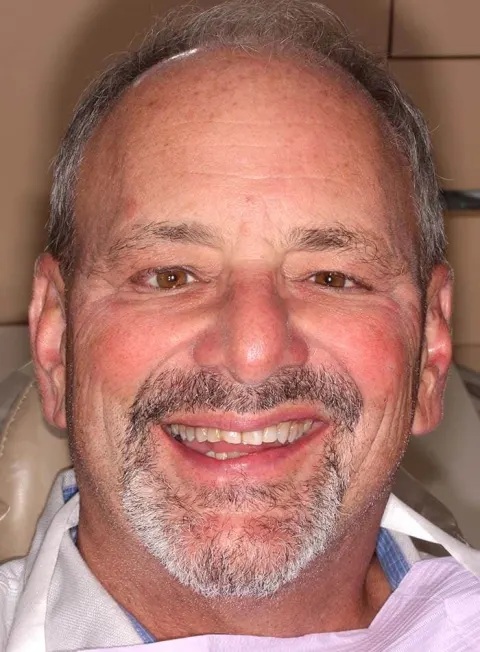
Patient case 07, before treatment
Before
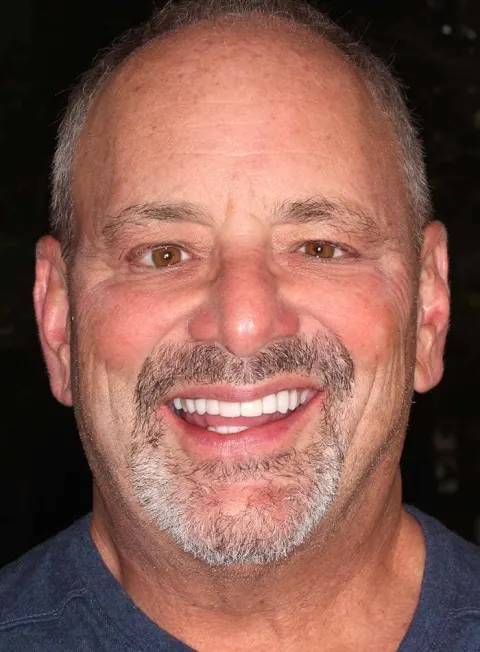
Patient case 07, after treatment by Dr. Macedo
After
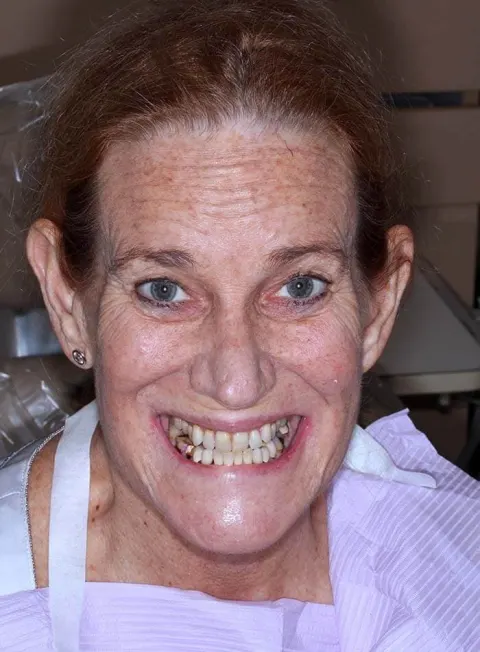
Patient case 15, before treatment
Before
Patient case 15, after treatment by Dr. Macedo
After
Patient case 18, before treatment
Before
Patient case 18, after treatment by Dr. Macedo
After

Individual results vary. Photos show real patients of this practice.

See Patient Reactions
Why a Prosthodontist

The Right Training for Implant Restoration

Implants involve two stages - the surgical placement (the post into the bone) and the prosthetic restoration (the crown that goes on top). Most general dentists outsource one stage and improvise the other. Prosthodontists are specifically trained in both.

Dr. Macedo is a prosthodontist with a PhD - one of the few PhD prosthodontists in private practice in the U.S. The depth of training shows up in cases other dentists refer out: complex multi-implant restorations, full-arch reconstructions, immediate-load cases.

The prosthetic crown is fabricated in our in-house lab by our master ceramists - color-matched and shape-matched to your existing teeth. The implant should be invisible.

Request a Consultation

Implant Options We Offer

  • Single tooth implant: Replace one missing tooth with a permanent solution
  • Multiple implants: Replace several teeth without compromising adjacent ones
  • Implant-supported bridges: Replace several teeth with fewer implants
  • Full-arch (All-on-4): Complete arch restoration with 4-6 implants. How All-on-4 works
  • Implant-supported dentures: Stable, removable solution for full-mouth replacement
  • Bone grafting: When and if needed for implant placement
How We Plan

The Tooth You End With Is Designed First

Two orders an implant case can run in. The order decides how much say the finished tooth gets in where the implant goes.

How we plan it

Restoration first

The finished tooth leads

  • The tooth you end with is designed before the implant goes in
  • Cone beam imaging and a digital scan settle bone, nerve, and bite first
  • The implant position serves that design, not the reverse
  • Our own lab builds the restoration to that plan, in this building
  • One prosthodontist owns the case from first scan to final bite check
The other order

Place first, restore later

The finished tooth follows

  • The implant is placed, then a restoration made to suit where it landed
  • Angle, depth, and gum shape are fixed before the crown is designed
  • The lab works around the position it is handed
  • Straightforward single-tooth cases often finish well this way
  • Front teeth, multiple implants, and full arches are where it shows

This is about sequence, not about who holds the handpiece. Skilled surgeons place implants beautifully and plenty of cases finish well in either order. The point is that restoring teeth is a prosthodontist's specialty, so here the finished tooth is drawn first.

Guided Surgery

Measured in 3D Before the First Incision

A cone beam scan builds a three-dimensional model of your jaw instead of the flat picture an X-ray gives. Bone height and width, nerve position, and the sinus floor decide whether an implant is simple or complicated. All three are known before treatment starts.

The scan and the digital impression become one plan. The implant position is set on screen, checked against the finished tooth design, then carried into the mouth: the decisions get made while they are still cheap to change. Read how the cone beam scanner is used here.

See the Technology

What the 3D Plan Settles Before Surgery

  • Bone volume: enough height and width to hold an implant
  • Nerve position: where the nerve runs, so it is avoided by design
  • Sinus floor: whether an upper implant needs a lift first
  • Implant angle: set to suit the finished tooth
  • Graft or no graft: answered before you commit
The Implant Process

What to Expect

1. Consultation

3D imaging, treatment planning, digital preview of the final result. Detailed cost and timeline before any work begins.

2. Placement

Implant post placed in jawbone. Typically 1-2 hours. Most patients return to work the next day.

3. Healing

3-6 months for the implant to integrate with bone. Temporary restoration during this period.

4. Restoration

Custom crown crafted in our in-house lab, attached to the implant. Color and shape match your existing teeth.

5. Final Adjustment

Bite check, polish, and any final shape adjustments. Most patients leave the same day completely restored.

6. Long-term Care

Implants need the same care as natural teeth. Cleaning every 6 months, x-ray checks annually.

Timeline

Three to Six Months, and Where the Time Goes

Very little of that is appointments. Most of it is healing, and the healing is what makes the result permanent.

Assessment

First appointment

A cone beam scan, digital impressions, and a full check of the gums and bone that would carry the implant. You leave with a written plan and the cost.

Placement

One appointment

The post is placed into the jawbone under anesthetic, typically in 1 to 2 hours. Most patients are back at work the next day, and a temporary usually goes on straight away, so there is no gap.

Healing and osseointegration

3 to 6 months

The long stage, and the one nobody can shorten. Bone grows onto the implant surface and locks it in place. That fusion is what makes an implant permanent.

Final restoration

Two or three visits

The crown, bridge, or denture is designed and built in our lab, tried in, checked for shade and bite, then fitted. Most patients walk out of the last visit finished.

What stretches it. A bone graft or a sinus lift adds a healing stage of its own, an extraction site needs time to settle, and active gum disease is treated first. You are told which apply at the consultation.

Second Opinions

When an Implant You Already Have Is Not Right

A good share of the work here starts with an implant somebody else placed: a crown that never looked right, a post that loosened, gum that keeps flaring. Redoing other people's work is normal for a prosthodontist.

The restoration, not the implant

Often the post is sound and the tooth on top is the problem: wrong shade, a contour that traps food, a high bite, a visible margin. Fixable without touching the implant.

An implant in an awkward position

If the post went in at an angle the finished tooth cannot work around, no crown fully hides it. We show you the 3D scan and say so.

Something that keeps coming loose

A restoration that will not stay put is telling you something about fit or load. It gets diagnosed, not re-cemented on repeat.

Sore, inflamed gum around it

Redness, bleeding, or bone loss around an implant is treated as the gum problem it is, and settled before any new restoration is planned.

An implant that has to come out

Sometimes the honest answer is removal, rebuilding the site, and restarting properly. You are told that before you spend anything.

The first job is naming which of the three it is: the implant, the restoration on it, or the gum and bone around it. Only one means starting again. Several failing restorations at once are planned as a full mouth reconstruction.

Bone Grafting

No Bone, No Implant

An implant needs bone to hold on to, and after years without a tooth, or after gum disease, there may not be enough left. A graft rebuilds that support, planned here around where the finished tooth needs to sit rather than around whatever bone is left, and it adds a healing stage of its own. The full grafting picture, including where the material comes from and why ridge preservation at extraction matters, sits on our gum disease treatment page.

Common Questions

Implant Treatment, Answered

What makes implant treatment here different?

An implant has two halves: the post in the bone, and the tooth on top. A prosthodontist is the dentist with specialty training in the half you see and chew with. Dr. Macedo is a prosthodontist with a PhD, so the restoration is designed first and built in our own lab.

Am I a candidate for implants?

Most people missing a tooth are. What matters is healthy gums, enough bone to hold the implant, and health good enough to heal well. Bone loss alone does not rule you out, since a graft or a sinus lift can build the missing support. Gum disease and decay are treated first.

How long does the whole implant process take?

Three to six months is normal: assessment, placement, healing while the bone fuses to the implant, then the final restoration. A temporary is usually fitted during healing so you are not without a tooth. Grafting or a sinus lift adds time.

Is implant placement painful?

Placement is done under anesthetic, so the appointment is pressure rather than pain, and most patients report less discomfort afterwards than they expected. Soreness for a few days is normal and handled with ordinary painkillers. You leave with written aftercare and a follow-up booked.

How long do implants last?

With good care and regular checkups, implants are a long-term replacement and often a permanent one. Think of the post and the restoration as two parts with two lifespans: the post is designed to stay, while the crown on top can be renewed like any restoration.

Implants, a bridge, or a denture?

Implants keep the jawbone stimulated, restore full chewing strength, and do not need the teeth either side reshaped the way a bridge does. A denture is removable and costs less up front, and an implant-supported denture sits between the two. Which fits depends on how much bone is left.

Do you take on failed implants placed elsewhere?

Yes. Complex work is the daily job of a prosthodontist, and that includes previous implant failures, full-mouth implant reconstruction, and significant bone loss. A scan and an exam tell us whether the problem is the implant, the restoration on it, or the gum around it.

Do you accept insurance for implant treatment?

We're a fee-for-service practice and out of network with all insurance plans. Plans that do contribute usually cover part of the restoration rather than the whole treatment. We help you maximize any out-of-network benefits and submit claims on your behalf as a courtesy. CareCredit, Cherry, and in-house payment plans are available.


Considering Implants?

Free Consultation, Prosthodontist Evaluation

First visit includes 3D imaging and a treatment plan. You decide based on real options, not pressure. See the technology behind the planning.

Serving St. Petersburg, Tampa, Clearwater, Dunedin and the Tampa Bay area.