
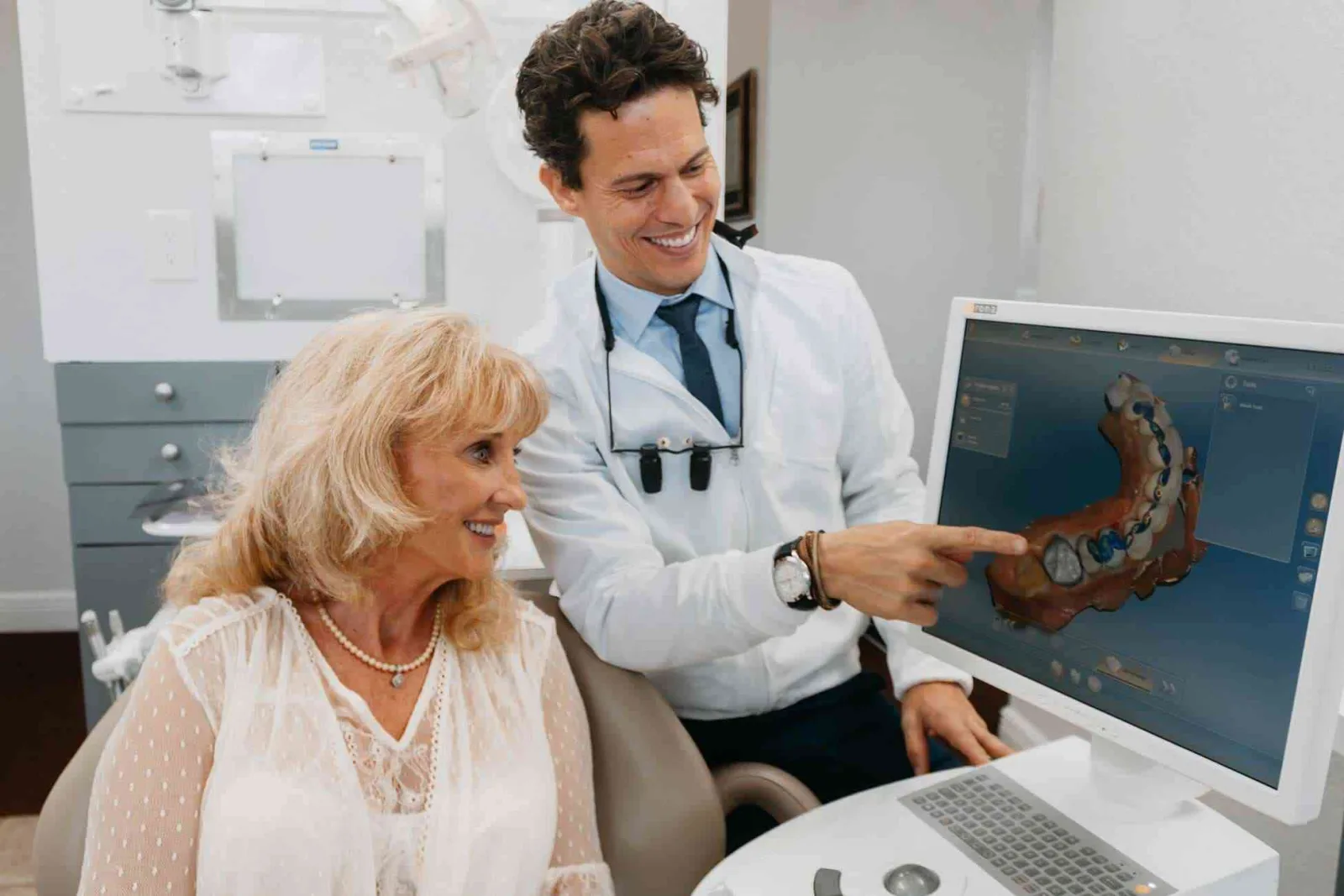
Dentures Made by a Prosthodontist, Trained in Replacement Teeth
Published by Dr. Roberto Macedo, DDS, MS, PhD, Prosthodontist
Prosthodontics is the dental specialty devoted to replacing missing teeth, so a denture is not a sideline here. Complete, partial, implant-supported, or a retrofit of the denture you already own, all designed by Dr. Macedo and crafted in our own lab.
Replacement Teeth Are the Specialty, Not an Add-On
Dr. Macedo is a prosthodontist with a PhD, one of the few PhD prosthodontists in private practice in the U.S. Dentures sit at the center of that training rather than at the edge of it.
Your denture is designed here and built here. Our master ceramists craft it on site, so shade, tooth shape, gum contour, and bite are set and corrected in the same building instead of shipped to an outside lab and back.
Fit is a design problem before it is a manufacturing one. The planning is where a denture earns its comfort.
Request a ConsultationWhat Sets Our Dentures Apart
- Case design: A prosthodontist plans every case
- In-house lab: Crafted on site by our master ceramists
- Faster corrections: Shade and fit changes without shipping
- Natural result: Tooth shape and gum contour matched to your face
- Full range: Complete, partial, implant-supported, stabilization
- 4.9 stars, hundreds of reviews: A reputation built on results
Two Types of Denture, Two Different Jobs
Which one you need comes down to how many natural teeth are left, and how sound they are.
| Compare | Complete Dentures | Partial Dentures |
|---|---|---|
| Who it is for | You have lost, or are about to lose, all the teeth in an arch. | You are missing several teeth but still have healthy ones worth keeping. |
| What it replaces | Every tooth in the upper arch, the lower arch, or both. | The gaps only. The denture is designed around the teeth you keep. |
| How it attaches | Rests on the gum ridge, held by fit and suction. Implants can anchor it. | A thin framework or clasps grip your remaining natural teeth. |
| The extra benefit | Supports the lips and cheeks, so the lower face keeps its shape. | Stops the remaining teeth drifting and tipping into the gaps. |
Real Patient Transformations
A small selection of real before-and-after cases from our St. Petersburg practice. Every smile personally designed by Dr. Macedo and crafted in our in-house lab.

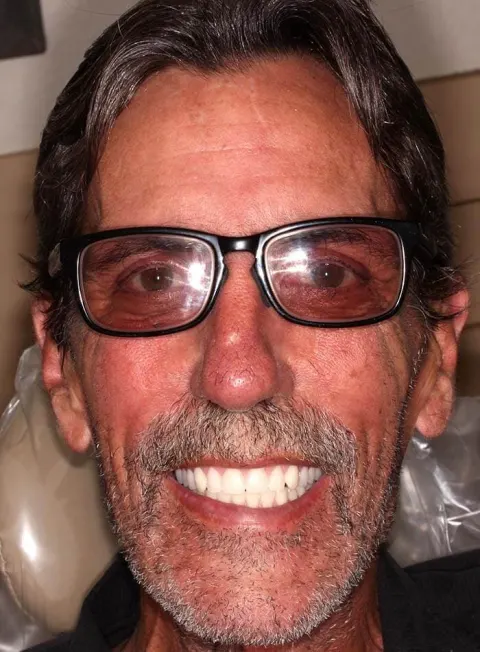




Individual results vary. Photos show real patients of this practice.
See Patient ReactionsPlan on 5 to 8 Years, and a Few Adjustments Along the Way
With good care a denture typically lasts 5 to 8 years. What wears out first is usually not the denture, it is the fit.
Once teeth are gone the jawbone underneath slowly shrinks, so the ridge your denture sits on keeps changing shape. Relines, small adjustments, and eventually a remake are normal parts of owning a denture, not a sign that something went wrong.
We check the fit at your maintenance visits and adjust early, before a loose denture turns into sore spots or slipping at the dinner table.
Request a Fit CheckDaily Care Basics
- Clean every day: Soft denture brush and a non-abrasive cleaner
- Rinse after meals: Shifts food before it settles underneath
- Out at night: Your gums need hours without pressure
- Keep them moist: Store in water or solution, never let them dry out
- Handle over a towel: A drop into a hard sink is the usual breakage
- Never glue a repair: Home fixes ruin the fit, bring it to us instead
The Upgrade That Stops the Slipping
The complaint about traditional dentures is nearly always the same: they move. Implant-supported dentures deal with the cause rather than the symptom, by anchoring the denture to implants set in the jaw.
Snap-on attachments hold it firmly in place, and you still take it out to clean it. Because the implants carry the load, you get a bite you can trust on food you had given up on, and you can talk without bracing for a slip.
Implants also keep the jawbone stimulated, which slows the bone loss that makes a traditional denture looser year after year.
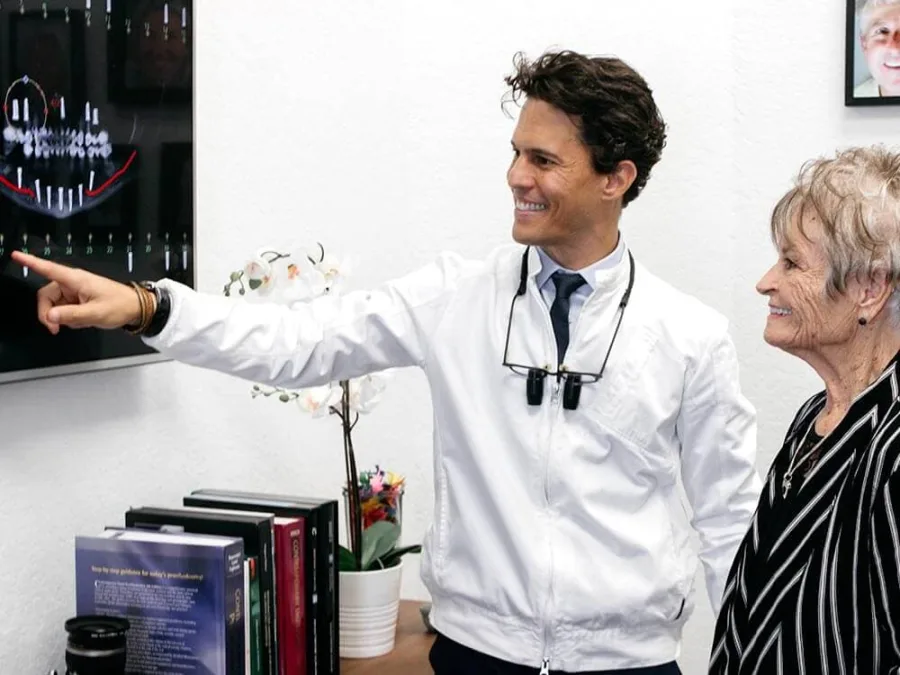
Planned by the prosthodontist
3D imaging first. Dr. Macedo places the implants around the finished denture, not the other way round.
Fewer implants than a fixed arch
A snap-on denture needs fewer implants than a fixed full-arch restoration, which keeps the surgery and the cost down.
Still removable
Snap it in for the day, take it out to clean it properly. Stability without giving up easy hygiene.
Already Have a Denture? You May Not Need a New One.
Denture stabilization fits snap-on attachments to the denture you already own, so it can lock onto implants. Same denture, completely different day.
Who it suits
You have a denture you are otherwise happy with, the plate itself is sound, and there is enough jawbone to hold implants. We check all three before recommending it.
What changes
The slipping stops. Eating, speaking and laughing stop being a calculation, and most people drop the adhesive entirely.
What stays the same
Your denture. The teeth you are used to and the face you recognize in the mirror, retrofitted rather than replaced.
What It Costs, and How to Pay for It
Cost tracks the type of denture and how much the arch needs. Implant-supported cases cost more than a traditional removable denture, because of the implants and the surgery involved. You get the full breakdown in writing at your consultation, before anything starts.
Fee-for-service care
We're a fee-for-service practice, so your treatment is planned around what the case needs rather than what a plan will allow.
Claims submitted as a courtesy
We are out of network. We help you make the most of any out of network benefits your plan offers and submit the paperwork for you.
Financing options
CareCredit, Cherry, and in-house payment plans spread the cost over time. Our financing page explains how each one works.
Dentures, Answered
What is the difference between complete and partial dentures?
A complete denture replaces every tooth in an arch and rests on the gum ridge. A partial denture fills the gaps when you still have healthy natural teeth, and clips onto them with a thin framework or clasps. Dr. Macedo decides which fits your case after examining what is left and how sound it is.
How long do dentures last?
Plan on 5 to 8 years with good care. What ages first is usually the fit rather than the denture itself, because the jawbone under a denture slowly changes shape once teeth are gone. Relines and small adjustments along the way are normal, and we check the fit at your maintenance visits.
Can I sleep in my dentures?
We recommend taking them out overnight. Your gums need time without pressure, and a nightly soak keeps the denture clean and moist. If you have been sleeping in yours and your gums feel sore or inflamed, that is usually the reason.
Are implant-supported dentures better than traditional dentures?
For stability, yes. Traditional dentures rest on the gum and can move when you eat or speak. Implant-supported dentures snap onto implants set in the jaw, so they stay put, and the implants keep the bone stimulated. They cost more because of the implants and the surgery involved, so we walk you through both options honestly at your consultation.
Can my current denture be stabilized with implants?
Often yes. Denture stabilization fits snap-on attachments to the denture you already own so it locks onto implants. Three things need to check out first: the denture itself has to be sound, the fit has to be worth keeping, and you need enough jawbone to hold the implants. We assess all three before recommending it.
How many implants does it take to hold a denture?
There is no single number. A removable snap-on denture is commonly held by two to four implants per arch, while a fixed full-arch restoration uses more. Dr. Macedo confirms the plan after 3D imaging, working back from the finished denture rather than placing implants and hoping the teeth fit them.
Will I be able to eat normally with dentures?
Expect a learning period with any new denture: start with softer foods, cut things smaller, and chew evenly on both sides. A well made denture handles most of a normal diet. If you want to go back to the food you have given up on without a second thought, implant support is the answer, because the bite force goes through the implants instead of your gums.
How much do dentures cost, and do you take insurance?
Cost depends on the type of denture and how much the arch needs. Implant-supported cases cost more than a traditional removable denture. We're a fee-for-service practice and out of network with all insurance plans, so we help you make the most of any out of network benefits and submit the claim paperwork for you as a courtesy. CareCredit, Cherry, and in-house payment plans are available, and you get the full investment in writing before anything begins.
Related Reading
Dr. Macedo talked through the options open to denture wearers on The Wellness Hour, the nationally syndicated health program. The full segment is on our in the news page.
Dental Implants
Single, multiple, and full-arch implants placed and restored by a specialty-trained prosthodontist.
ServiceFull Mouth Reconstruction
When the whole bite needs rebuilding, not just the missing teeth replacing.
Patient guideThe Difference Between Full and Partial Dentures
A longer walk through both options: fit, cost, upkeep, and who each one suits.
Patient guideHow Dental Implants Can Improve Your Denture
What changes when implants take the load: comfort, chewing power, and confidence.
Find Out Which Denture Fits Your Case
Bring the denture you have, or bring the problem you have. You leave with a clear plan, the options ranked honestly, and the investment in writing.
Serving St. Petersburg, Tampa, Clearwater, Dunedin and the Tampa Bay area.