Gingivitis
Reversible
- Inflammation sits in the gum tissue only
- Gums bleed when you brush or floss
- No bone loss yet
- Usually clears with one deep cleaning and better daily care
- Back to routine six-month cleanings afterwards

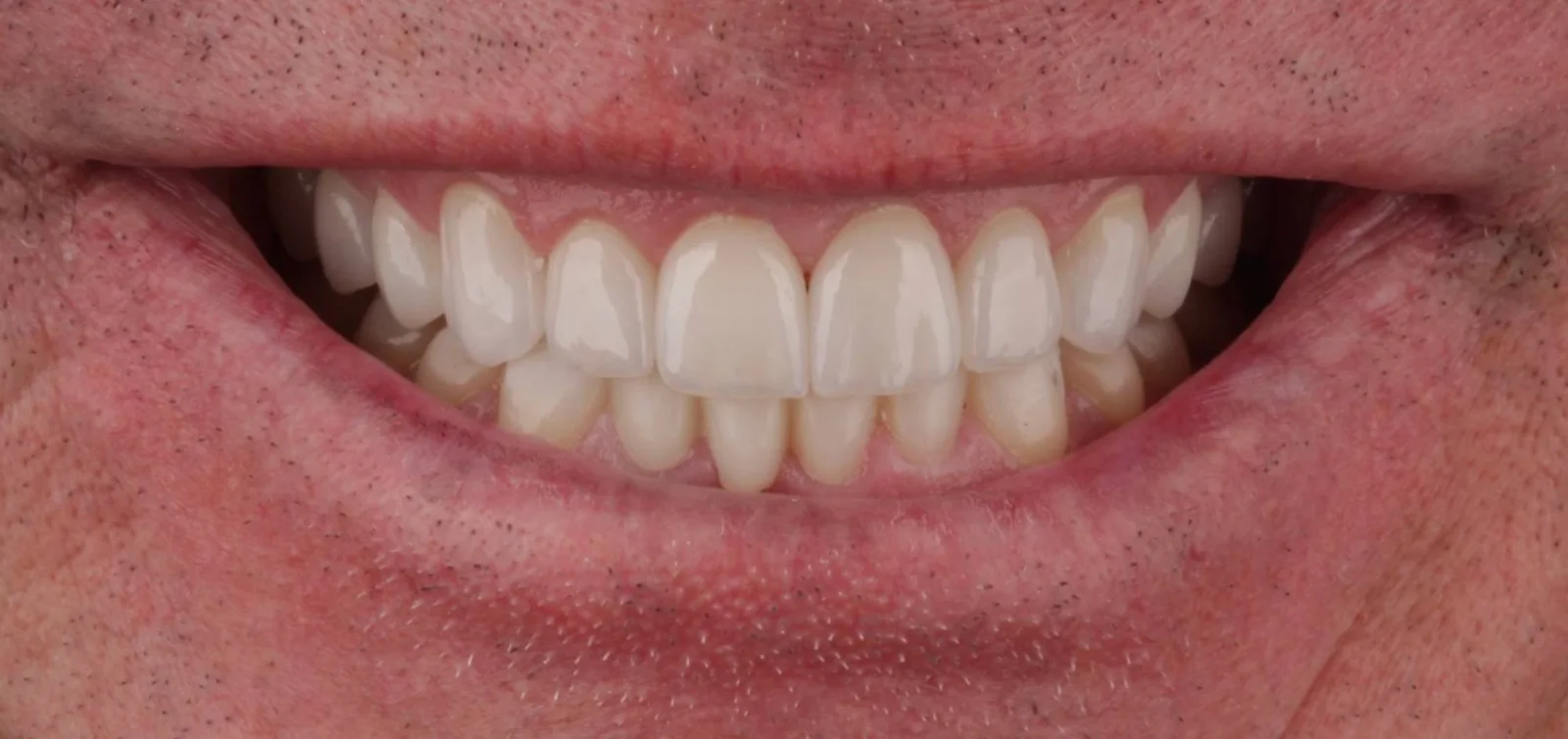
Published by Dr. Roberto Macedo, DDS, MS, PhD, Prosthodontist
Healthy gums hold everything else up: your teeth, your crowns, your implants. We treat gum disease at every stage, from the deep cleaning that reverses it early to laser therapy, ridge preservation, and bone grafting, all planned by a specialty-trained prosthodontist.
Gum disease is the leading cause of adult tooth loss, and it rarely hurts until it is advanced. That is why most people find out late.
Dr. Macedo is a prosthodontist, the dentist with specialty training in rebuilding and replacing teeth. Every restoration he places, from one crown to a full arch, sits on the gum and bone underneath it. So gum health gets checked first here, not last.
Caught early, gum disease usually needs one deep cleaning and a tighter maintenance schedule. Left alone, it becomes surgery, grafting, and replacement teeth.
Request a ConsultationThe difference decides everything about your treatment. One stage is reversible. The other is managed for life.
Reversible
Managed, not cured
Which one you need comes from what the pocket measurements and x-rays show, not from a package.
Curious about the laser option? Read how laser dentistry works and why recovery is faster.
When a tooth comes out, the bone that used to hold it starts shrinking within months. Advanced gum disease does the same thing, which is why teeth get loose before they get lost.
A bone graft rebuilds that support so the jaw is dense and strong enough to hold a dental implant. As a prosthodontist, Dr. Macedo plans the graft around the finished restoration, so the implant ends up where the tooth should be, not where the bone happens to allow.
Grafting is also why ridge preservation at extraction matters so much: keeping the bone is far simpler than rebuilding it.
When is a bone graft necessary?A professional cleaning plus a measurement of your gum pockets. Almost all gum disease is caught at this visit, long before you would feel anything. Book it as part of your routine dental care.
Brushing and flossing clears the soft film that hardens into tartar within days. Once it hardens, no toothbrush will shift it. That is the whole reason cleanings exist.
Patients treated for periodontitis usually move to a three or four month periodontal maintenance schedule. Sticking to it is the single best predictor of whether the result holds.
Early costs less. One deep cleaning at the gingivitis stage is a fraction of what surgery, grafting, and implants cost later. Financing options are available either way.
Permanent tooth replacement, planned and restored by a specialty-trained prosthodontist.
Checkups, cleanings, and the routine care that catches gum disease early.
CareCredit, Cherry, in-house payment plans, and how we handle out-of-network benefits.
Why laser treatment means less bleeding, less swelling, and a faster recovery.
When a graft is genuinely necessary before an implant, and when it is not.
At the gingivitis stage, yes. The inflammation sits in the gum tissue only, and a deep cleaning plus better daily care usually clears it completely. Once it reaches the bone and becomes periodontitis, the goal changes: we stop the loss and protect what is left, rather than promise the bone back.
Most of it is not. Scaling and root planing is done under local anesthetic, so you feel pressure and water rather than pain. Laser treatment is gentler again. For gum surgery or grafting we plan comfort in advance and tell you exactly what recovery looks like before you agree to anything.
Gums are usually tender for a day or two and teeth can feel sensitive to cold for a week or so while the gum tissue tightens back. Normal over-the-counter painkillers handle it, and most patients are back to eating normally the same evening.
A deep cleaning is typically two visits, one side of the mouth per appointment, with a review around six weeks later to measure how the gums responded. Cases needing surgery, laser therapy, or grafting run longer. You get the full sequence and timeline at your consultation, before anything starts.
We're a fee-for-service practice and out of network with all insurance plans. We help you maximize any out-of-network benefits your plan offers and submit the claims on your behalf as a courtesy. CareCredit, Cherry, and in-house payment plans are available if you would rather spread the cost.
It depends on the case, not on what sounds newer. Scaling and root planing is still the foundation of periodontal care and clears most early and moderate disease. Laser treatment adds precision where infected tissue has to come out, with less bleeding and a quicker recovery. Dr. Macedo picks based on how deep the pockets measure.
Gum tissue does not regrow on its own once it has receded, and neither does lost bone. What treatment does is stop the recession getting worse and protect the exposed root surfaces from decay and sensitivity. At your consultation we will tell you honestly what coverage is realistic in your case.
Research has linked gum inflammation with heart disease, diabetes, and complications in pregnancy. Chronic infection in the gums is still chronic infection, and the mouth is not separate from the rest of the body. Treating it is worth doing for reasons well beyond your teeth.
A periodontal exam measures every pocket and tells you exactly which stage you are at. No guessing, no scare tactics, just the numbers and the options.
Serving St. Petersburg, Tampa, Clearwater, Dunedin and the Tampa Bay area.